
I was lucky enough to catch the joint seminar Sam Kwok organised last year. The seminar was both practical and realistic, and applications were stressed. The message was, there's no point in training one way and fighting another.
It was lovely to see Yip Ching and Tsui-Suen Ting come together. Their chi sau was breathtaking and while casually chatting about their experiences, they simply blew all the younger guys away. Once contact was broken they would explode forward, following the concept of 'Lat sau ching choi' which translates as 'Stay with what comes and thrust forward when released'. This fundamental law is often forgotten, ignored or passed over. Flashy tricks will only work if your opponent's basics are weak. In reality, people never let themselves get hit about all day long. You might have one chance, perhaps, and that's it! Teaching in class is different. Students are encouraged to attack freely and if I were to close them down each and every time they attacked, then they'd learn little.
Anyway it was nice to attend the seminar and enjoy the meal afterwards, when many different Wing Chun practitioners all sat together around one table. A rare event, it seems!
Why so much acrimony and politics in Wing Chun community? A vexed question, but one which needs addressing. Of course, people are the problem - people and their greed, envy and preoccupation with labels such as 'traditional', 'modern', or 'modified'. To me, it seems a redundant historical debate!
At given points, Wing Chun has been added to, not modified. The pole or the butterfly knives, or perhaps Leung Jan's attempts at simplification are examples of the sort of modifications I mean. At the time these modifications were introduced we might have seen them as modern, whereas today they are seen as traditional. Progress means an on-going development of what has previously existed.
There is also an interesting debate about the Yip Man family tree. Having been taught by Yip Man does not automatically guarantee that a student is any good. A great teacher does not always and of necessity produce great students! Indeed, some of Yip Man's students were greater than others. Yip Man taught all students according to weight, height, size and disposition, so what they all acquired is subtly different, sponsoring lines of development with different emphases. The result is that some lines of Wing Chun now appear to some as vastly different from others. Just to complicate matters, there are also, of course, lines of development which have completely by-passed Yip Man. However, the same concepts underpin all these various strands of Wing Chun practice and at bottom, the differences are generally superficial anyway!
The only relevance in all this, so far as I can see, is whether or not the individual practitioner is any good. The Chinese ask, 'Can you do it or not?' and this, to me, is the only thing that matters. I've seen Yip Ching's and Tsui-Suen Ting's stuff and it works. Period.
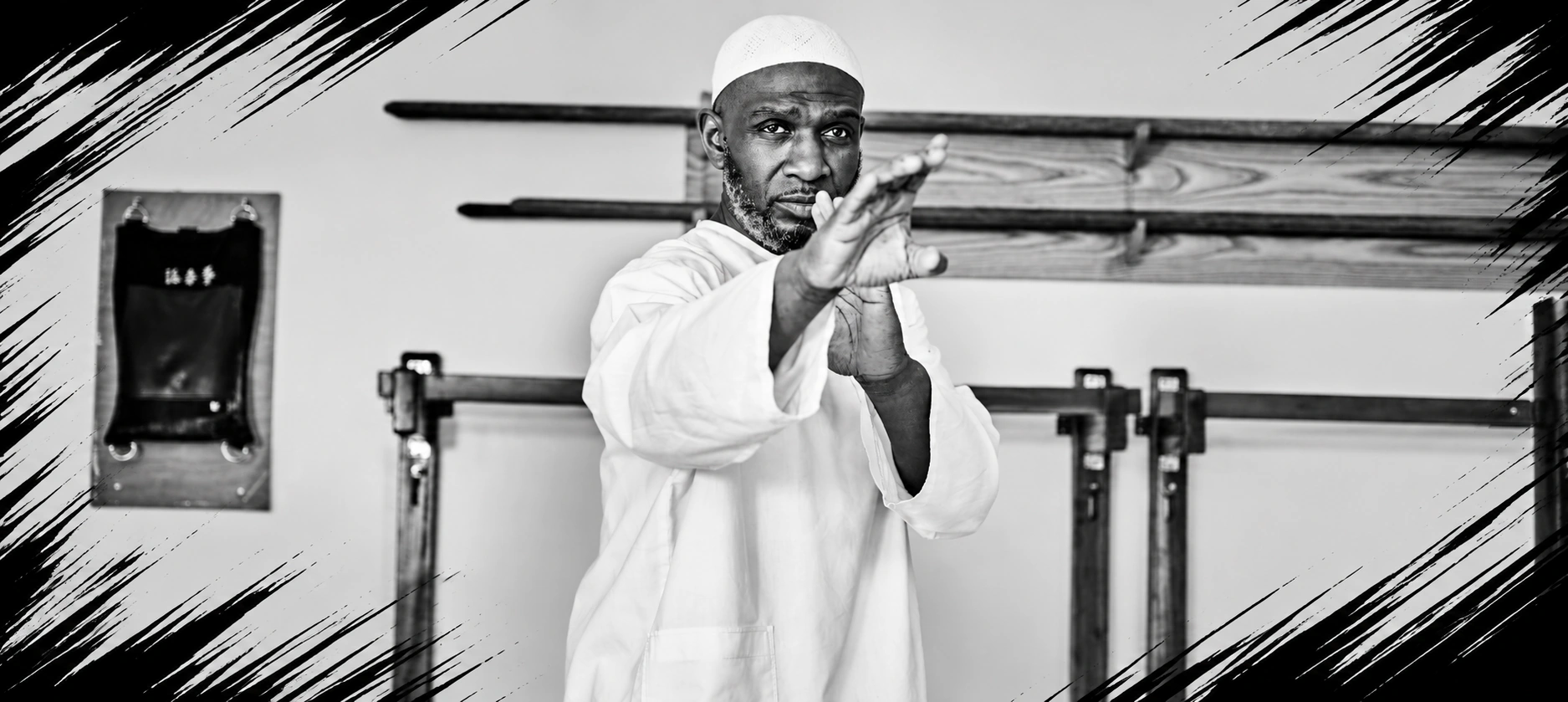
As for myself, I teach a unified system with the same basics and concepts taught to everyone. It's only later that an individual's martial maturity blossoms but this can only blossom effectively if set on good basic groundwork. because each student is physically and mentally different, then even though I teach them the same thing, their build/attitude will affect the way they practice. Certain Wing Chun techniques better suit certain situations so, for example, tall students may prefer to stay at mid-range in order to use their legs more. They may also use the natural length of their arms to prevent shorter opponents from closing distance.
On the mental side, some students are more enthusiastic and perhaps enjoy closing distance and rushing in. Others may have a more cautious nature, preferring a 'wait and see' strategy. Both strategies have merits and pitfalls but in the end it is the individual's ability that will decide the outcome.
My security work has taught me many things which I apply to my Wing Chun practice. Above all, it has taught me common sense. For example, it has taught me never to underestimate your opponent - treat them all with respect because you just never know who you may be facing. Some of my colleagues learned the truth of this the hard way and have suffered stabbings and even the odd shooting! If I see a hand slip into a pocket I react and 9 out of 10 times I've been right to do so. Why let someone arm themselves? So act before it is to late to react!
Security work has also taught me how to deal with fear. We all face fear and we must learn how to control it, and turn it in to our advantage - because make no mistake about it, fear can be good! It teaches respect, caution and prudence and properly channelled, it can focus our minds so we develop physical power, speed and energy.
I find my Wing Chun ideal for security work. There is often little time or space to manoeuvre in, so its emphasis on direct close-quarters attack is indispensable. It's very fast to operate, allowing you to switch to other possible sources of danger. This is important because you are dealing with a group of troublemakers, it's no good spending a lot of time on one guy. Wing Chun allows you to use one opponent as a temporary shield because dealing with multiple opponents requires totally different tactics to a one-on-one. Wing Chun caters brilliantly for this as well. Wing Chun is also useful when a low key response is called for because it contains pins, traps and immobilisation techniques, all of which can be useful. Thanks to my security work, I now appreciate more clearly certain fundamental Wing Chun concepts. For example, I can see the practical use of the Wing Chun concept of interception. Why wait to counter-attack, because if you do, it may be too late! Intercept not only the technique, but the intention. Don't wait for the actual attack but take control before things get out of hand. Get in first.
I also learned how important it is to size-up and evaluate your opponent. I am only 5ft 8" tall but I've had to deal with a crazed guy of about 6ft 6". I quickly realised that in any case, my centreline punches would simply not work because I'd need a step-ladder to reach his jaw. So I had to bring him down to my level first!
I learned the concept of minimum force a long time ago when my opponent walked straight onto my centre line punch. He was throwing a hook at the time! That didn't matter though because he ended up with extensive facial injuries and the police became involved. Thankfully they later dropped charges, though they remained convinced that to do the damage I did, I must have hit him with an iron bar! They were hostile and aggressive up until my solicitor told them I was a martial artist. Then they seemed to accept my story - that I didn't hit him with a bar.
With the title 'martial artist', I suddenly became Bruce Lee in their eyes. I might have been crap for all they knew but the label 'Martial Artist' and the hype surrounding it convinced the police. This is indicative of a general attitude about martial artist. Yet I know many non-martial artist who can do the business and many so-called martial artist who can't.
Many students join my club because of word-of-mouth recommendations based upon my no-nonsense reputation. But how can an inexperienced beginner tell if the club he is joining is really any good? In the end, there is no simple solution. In my view, too much emphasis is laid on learning from a top, well-known teacher. Only one person can be the best, so does this mean that all the rest of us are second rate? Would Yip Ching be second-rate if Tsui-Suen Ting was considered the best? Many teachers are worth their salt and in any case, even the best can't turn an unsuitable student into superman. Whatever the standard of the teacher, the standard of the student is also important and regardless of who teaches you, it will take a lot of sweat, tears and commitment. But as it is, the 'My Sifu is the best' remains the most common cause of all the politics. So my message is: be the best YOU can be! So when searching for a true master, treat such things as origins, training history and reputation as no more than sideshows. These say what he is and what he has done but they don't tell you the most important thing with any teacher, and that is, his ability to teach! It doesn't matter who he was taught by, or where he was born. My Cantonese teacher, Victor Appiah, suffers from a public perception that he cannot teach Chinese properly because he is not Chinese. When some European pupils first see a black teacher of a Chinese martial art, their faces say it all!
Incidentally, I study Cantonese in order to research the origin of, and the terms used in, Wing Chun. This has led me to a love of the Chinese language and culture. In Wing Chun, crucial concepts are contained within proverbs like for example, 'Lat sau ching choi', or 'Kil sau ma bo' which literally translates as 'Bridge hand horse stance'. The implication is that arms and legs have to be strong and ready when fighting. These proverbs are not easy to put into English and are often left untranslated - yet they still need to be explained to serious students because they embody fundamental precepts of practice. My next seminar will deal with Wing Chun forms and concepts, and their combative applications. The seminar will be a workshop open to all martial artists. No chi sau will be examined; rather we will concentrate upon speed, simplicity and directness. We will look at ways of finishing the situation before any chi sau is needed. I find that it only really goes further than this in the street if the aggressor is good enough to counter your attack. Only then do the benefits of chi sau come into play.